The Economist and The Athletic are two digital publications I try to read daily. Each week, I'll share two articles that caught my attention; one from each publication.
This week: stark football finance and why nostalgia sells.
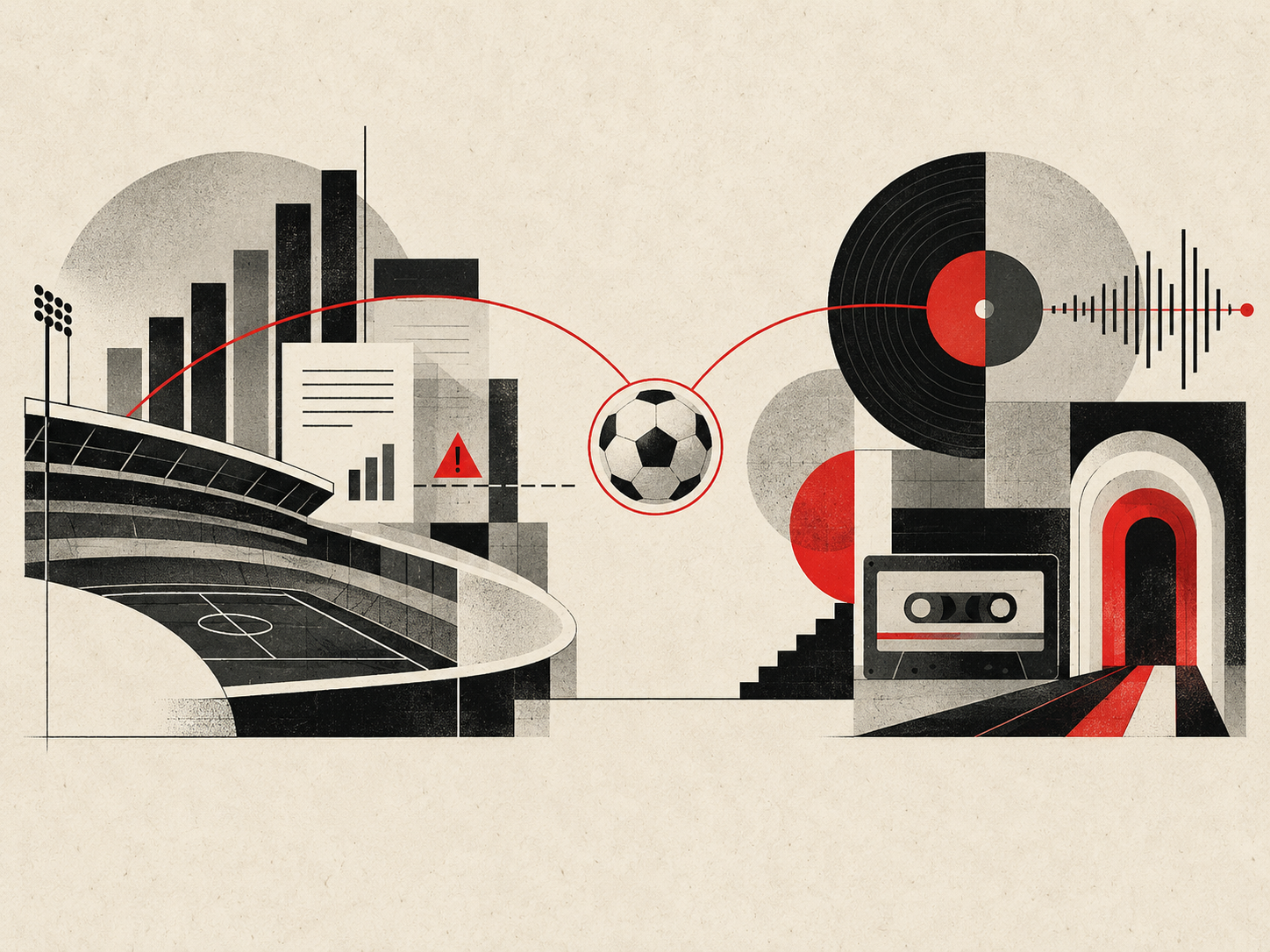
Both articles touch on what sits below the surface: the financial foundations of football clubs and the cultural forces shaping what we consume.
Regulator gives damning verdict on football’s finances
I previously mentioned that the Independent Football Regulator (IFR) was soon to release its draft State of the Game Report. The 244 pages are packed with detail and nuance. I would highly recommend downloading the report and then giving yourself a few hours to read it. Its findings are stark:
“English football is underpinned by contradictions. It is simultaneously the richest, best and most deeply competitive in the world, but it’s also standing on the edge of a financial disaster.”
Some bite-sized illustrations from the IFR highlight:
· Revenue: Record annual revenues total £9bn.
· Losses: 94% of clubs were loss-making last season.
· Wages: Six clubs spent more than 100% of their revenues on player wages.
· Funding: More than 25% of all clubs would run out of money within 30 days if owner funding stopped.
The IFR reaches this conclusion based on significant research conducted over a number of years. It could prove a watershed moment in English football, giving the regulator considerable evidence to justify its approach. The report’s message is unambiguous:
“Anyone reading this report can be in no doubt about the need for intervention.”
Against that backdrop, the IFR has set out a six-point plan. By the time full licences are granted to clubs by May 2030, its objective is to reduce “systemic risk” and “improve club financial soundness” by requiring stress tested business plans and sufficient capital reserves. Get ready for some belt-tightening.
Culture’s 20 Year Nostalgia Rule
The Economist’s culture correspondent has written about a millennial revival. Specifically, for those aged 30-45 (I just about squeeze in). The culture of the late 1990s and 2000s is back in fashion. According to Vogue, skinny jeans are back (annoyingly I just threw mine out).
As one Hollywood agent quoted in the piece puts it, “culture reliably runs on a two-decade schedule. The sights and sounds of our childhood and teenage years help to determine our taste in music, film and fashion. Then, 20 years or so later, we indoctrinate our children with the same interests.”
One explanation is what the piece calls “creative conservatism”. Hollywood is increasingly falling back on tried-and-tested intellectual property. The article points to The Devil Wears Prada 2 and Baywatch as the latest nostalgia-driven millennial content. Live events are another with Oasis, My Chemical Romance and Shania Twain all on lucrative comeback tours. Lastly, as “kidults” are spending on toys and gaming (“43% of 35-44-year-olds in rich countries own a games console”), companies are doubling down and targeting millennials and all their disposable income.
It got me reflecting on my own childhood preferences and realising I fit squarely into the cyclical mould. My daughters have got into arcade machines (especially Street Fighter), Happy Gilmore and 90s hits on Apple Music (I’ve needed to explain Natalie Imbruglia and the cultural behemoth that was Neighbours). Failed miserably, I have, though, in passing on my love of Star Wars. May the Force be with them one day.